
When you think of Iceland, you probably picture waterfalls, volcanoes, glaciers and spectacular scenery. Street art? Probably not so much.
But I love looking for street art wherever I travel, and it turns out Iceland has plenty of it!
During our road trip around Iceland, we found murals on everything from huge city buildings to tiny sheds in fishing villages. There were rainbow-painted streets, quirky artworks and even some decorated rubbish bins.
Some of the best finds were completely accidental, which is exactly how I like it.
If you enjoy street art too, here are the best places to look for it in Iceland, along with a few tips from our travels.
This article may contain affiliate links. This means that if you make a purchase after clicking on a link, I may receive a small commission. Read the full disclaimer here.
Where to Find Street Art in Iceland
You don’t need to plan your whole Iceland holiday around street art, but there are some great places to look for it as you explore.
Reykjavík and Hellissandur were my favourites, but we also found artwork in other towns along the way.
Here are five places to include in your Iceland itinerary, starting with the ones we explored ourselves.


1. Reykjavík Street Art – Allow 2–3 Hours
Reykjavík was our first introduction to Icelandic street art, and there’s certainly plenty to find.
You’ll see murals around the main shopping street, Laugavegur, and nearby Hverfisgata, but don’t limit yourself to the main tourist areas.
Some of our best finds were down little laneways, on residential buildings and in places we probably wouldn’t have visited otherwise.


Before we arrived, I’d found an online street art map that seemed like a good idea. Unfortunately, it wasn’t particularly useful.
Some murals had disappeared, others had been painted over, and we couldn’t always find what we were looking for.
In the end, we gave up on the map and simply wandered.


We’d spot a bit of colour in the distance and head off to investigate, only to find something else around the next corner.
It wasn’t the most efficient way to explore Reykjavík, but we certainly saw plenty of the city!
There was a real mixture of styles, too. Huge portraits covering entire walls, colourful abstract designs, animals, cartoon characters and all sorts of other artwork.
We even came across an artist working on a new mural.
If you want somewhere specific to start, explore Laugavegur and Hverfisgata, then head towards Skólavörðustígur.
This is where you’ll find Reykjavík’s famous Rainbow Street, with its colourful road leading up to Hallgrímskirkja church.


Another area worth exploring is Grandi, the former harbour and industrial district. Its large buildings have provided canvases for some impressive murals over the years, although individual artworks come and go.
My tip: Allow a couple of hours to wander through central Reykjavík, or longer if you’re including Grandi. It’s a great free activity and an excuse to explore streets you might otherwise miss.
2. Ólafsvík – Allow 10–15 Minutes
While exploring the Snæfellsnes Peninsula, we stopped in Ólafsvík and found another of Iceland’s colourful rainbow streets.
This one runs beside the town’s unusual modern church, Ólafsvíkurkirkja, which makes a great backdrop for photos.

It’s a quick stop, and you don’t need long to enjoy it, but I thought it was worth pulling over for a look.
Ólafsvík is only a short drive from Hellissandur, so it’s easy to visit both on the same day.
My tip: If you’re already exploring the Snæfellsnes Peninsula, add this to your route. You don’t need to set aside much extra time.
3. Hellissandur – Allow 1 Hour
If you love street art, make sure you include Hellissandur on your Iceland itinerary.
This tiny fishing village on the Snæfellsnes Peninsula has earned the nickname Street Art Capital of Iceland, and I can see why.


There are murals everywhere!
They cover houses, sheds, old fishing buildings and just about any other available wall.
The transformation began in 2018, when local artist Kári Viðarsson helped bring Icelandic and international artists together to decorate the village.
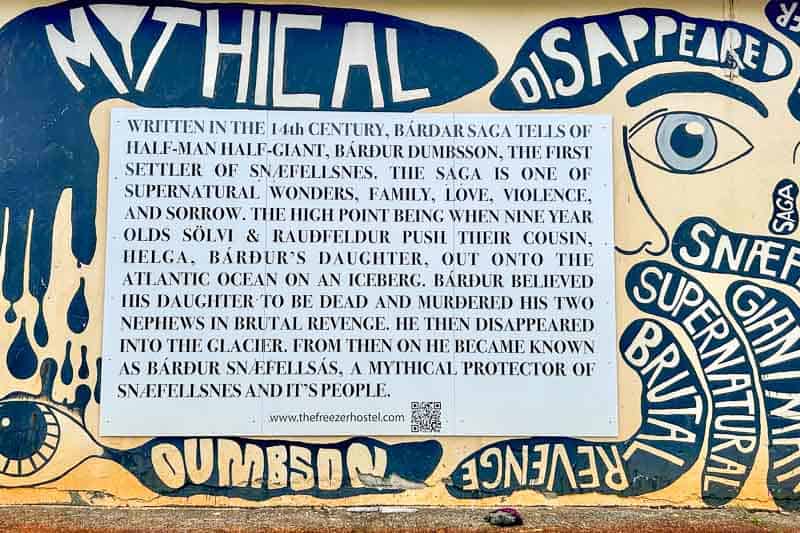


Some artworks are enormous, covering entire buildings, while others are smaller and a little harder to spot.
We found everything from colourful birds and animals to rather dark and mysterious characters.
There are also murals inspired by Icelandic folklore, including stories about Bárður, a half-human, half-giant associated with the Snæfellsnes Peninsula.


I particularly liked that the art wasn’t all in one place. We drove around the little streets, stopping whenever something caught our eye.
You could easily explore the village on foot, though. It’s not very big, and you can see a lot in less than an hour.
My tip: You don’t need a guided tour or a special map. Just wander through the village and look around. Many murals are visible from the road, which is handy if Iceland’s weather isn’t cooperating!
4. Akureyri – Allow 30–60 Minutes
We also found street art while exploring Akureyri, one of the main towns along Iceland’s Ring Road.
There are murals scattered around town, but it was some of the smaller artworks that caught my attention.


One of my favourites was the decorated rubbish bins, which had been turned into little monsters.
These quirky creations are the work of local artist Jonna Jónborg Sigurðardóttir, and you can look for them around the town centre and old town.
It’s such a simple idea, but it made me smile.
We also spotted artwork on fences, garages and small sheds during our travels.
Not every piece of street art needs to cover an entire building to be worth stopping for.
My tip: Akureyri is a good place to take a break while driving the Ring Road. Allow a little extra time to explore the central streets and see what you find.
5. Seyðisfjörður – Allow 30–60 Minutes
Another place worth considering is Seyðisfjörður, a small town in East Iceland famous for its rainbow-painted street.
The colourful road leads towards a pretty blue church, with mountains rising behind the town.
The rainbow street, Norðurgata, was painted by local residents in 2016 and has become one of the town’s best-known attractions.
You’ll also find colourful buildings and a creative atmosphere, making it an interesting place to explore beyond the rainbow street.
Seyðisfjörður is around 27 kilometres from Egilsstaðir, reached by Route 93 across the Fjarðarheiði mountain pass.
It’s a detour from the Ring Road, so allow time for the drive in both directions. Sadly we didn’t fit it into our trip due to the bad weather.
My tip: If you’re exploring East Iceland and the weather is good, Seyðisfjörður is worth considering. Check road conditions before heading over the mountain pass, particularly outside summer.
Planning Your Iceland Street Art Itinerary
One of the best things about looking for street art in Iceland is that you can combine it with your other sightseeing.
You don’t need to spend whole days searching for murals.
If you’re visiting Reykjavík for a short break, spend a couple of hours wandering through the city centre.


If you’re exploring the Snæfellsnes Peninsula, add Ólafsvík and Hellissandur to your itinerary. They’re close together and make an easy combination.
And if you’re driving the Ring Road, keep an eye out for street art in Akureyri, with Seyðisfjörður as an optional detour in East Iceland.
Remember that the Snæfellsnes Peninsula is not part of the Ring Road itself, so you’ll need to allow extra time if you’re including it.
I wouldn’t recommend driving hours out of your way just to find one mural. Instead, keep your eyes open as you explore. You might discover something even better than the artwork you were looking for!
Tips for Finding Street Art in Iceland
After spending quite a bit of time searching for murals, here are a few things I learnt.
- Don’t rely entirely on online maps. Street art changes, and maps can quickly become outdated.
- Explore the side streets. Some of our favourite finds were away from the main tourist areas.
- Look down laneways and around buildings. Just make sure you’re allowed to be there!
- Allow time to wander. Street art hunting is much more fun when you’re not rushing between attractions.
- Keep your camera handy. You never know when you’ll spot something interesting.
- Respect private property. Many murals are painted on homes and other private buildings.
And that third point about laneways? I learnt that one the hard way.


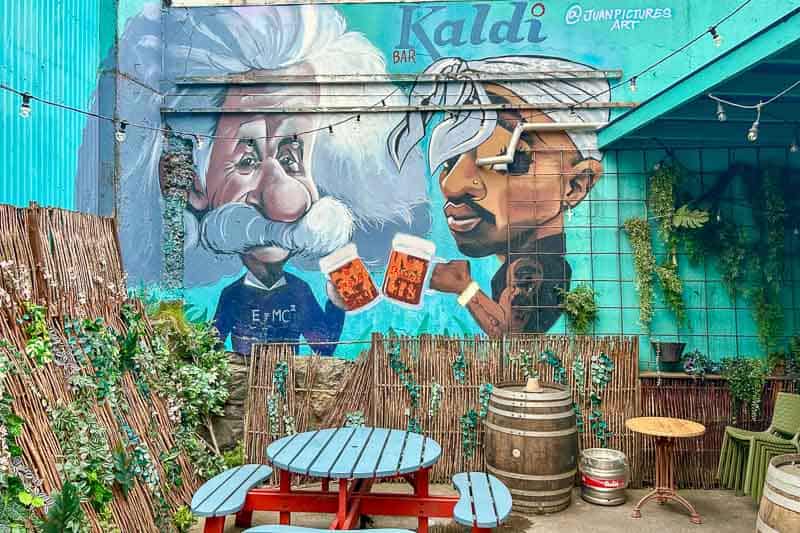
While exploring Reykjavík, we wandered into a rear courtyard after spotting some interesting street art.
It was all going well until we realised we might not be able to get back out!
For a moment, I thought we were going to find ourselves locked in there.
Thankfully, we managed to escape, but it was a good reminder that not every interesting-looking laneway is necessarily a public thoroughfare!
Don’t Miss Iceland’s Street Art
I’ve always enjoyed looking for street art when I travel.
It’s free, it’s interesting, and it gives me a reason to explore streets I might otherwise walk straight past.
I also like that you never quite know what you’re going to find.
Sometimes I’ll spend ages looking for a particular mural I’ve seen online, only to discover it’s gone. Then I’ll turn the corner and find something even better.
That’s exactly what happened in Iceland.
We found far more street art than I’d expected, and it became one of those little extras that made our road trip even more enjoyable.
So while you’re busy planning your Iceland itinerary around waterfalls, glaciers and volcanoes, don’t forget to look at the walls too.
You might be surprised by what you find!
Planning Your Own Iceland Road Trip?
If you’re planning your own Iceland adventure, you might like to start with our 10-day road trip around Iceland to see how we fitted everything in.
Iceland isn’t exactly known for being cheap, but we found plenty of ways to keep the costs down without missing out on the good stuff.
We also travelled around in a camper van, so if you’re considering doing the same, I’ve shared our experiences staying in campgrounds around Iceland, including what they cost and what facilities were available.
Iceland is one of those places where there’s something interesting around almost every corner, whether it’s a spectacular waterfall or a colourful mural on an ordinary building.
So leave a little room in your itinerary for the unexpected. You never know what you might find!
TRAVEL PLANNING ESSENTIALS
Flights – Book direct with the airline, always.
Book accommodation – My go to is Booking.com
Hire a rental car – DiscoverCars.com is where I search many car rental companies in one place
Get travel insurance – I use CoverMore for my insurance.
Pick up an eSIM – My eSIM of choice is Airalo
Book activities, tours & attractions – I use a few different websites for this. Viator, Get Your Guide and Klook are my first options.
Stay safe with a VPN – I use NordVPN to keep me safe online
Manage your money – I use Wise and ING (Australia) for my travel accounts.
