
There are some things I do almost every time I arrive in Singapore, and one of them is having kaya toast for breakfast.
In fact, I have a bit of a tradition now – on my first morning in Singapore, I head to Ya Kun Kaya Toast for a traditional kaya toast set.
It’s sweet, rich, has way more butter than I’d normally eat in a month, and immediately makes me feel like I’m back in Singapore.
This article may contain affiliate links. This means that if you make a purchase after clicking on a link, I may receive a small commission. Read the full disclaimer here.
Love discovering local eats?
Join the Singapore Stopovers Facebook group! We’re always swapping hawker food tips, hidden café finds, and must-try dishes – from chilli crab to kaya toast. Come share your favourites (or your foodie questions) with other travellers who get just as excited about lunch as sightseeing!
But after so many visits, I decided it was time to branch out.
On my recent Singapore trips I’ve tried the big chains as well as smaller, more traditional coffee shops. Kaya toast is just one of the many must-try foods in Singapore, and while the basic idea might be the same, they’re definitely not all identical.
Some have thick toast, some super-thin crispy bread and one serves it on a round bun. Some pile on the butter, while others are a little more restrained.
Then there’s the atmosphere – everything from modern shopping centres to old-school neighbourhood coffee shops filled with locals.
So if you’re wondering where to eat kaya toast in Singapore, these are the places I’ve personally tried – and which ones I’d choose.
Best Kaya Toast Spot for You – Quick Guide
Not sure where to start? Here’s a quick guide to help you choose your first (or next!) kaya toast experience:
Ya Kun Kaya Toast – Consistent, fast, and found almost everywhere. Great for a first-timer who wants to see what the fuss is about – plus, you can’t go wrong with their classic Set A.
Tong Ah Eating House – For an old-school experience with house-made kaya, and the option to try both crispy and traditional toast styles. Best for those who like a side of nostalgia with their breakfast.
Coffee Queen (Maxwell Food Centre) – Tucked inside a hawker centre, this one feels more local and relaxed. Great value, well-balanced kaya, and ideal if you’re exploring Chinatown or nearby sights.
What is Singapore Kaya Toast?
Kaya toast is one of Singapore’s classic breakfast foods. At its simplest, it’s toasted bread spread with kaya – a sweet coconut and egg jam usually flavoured with pandan – and butter.
And when I say butter, I mean butter. At some places you’ll find surprisingly thick slabs of cold butter sandwiched between the warm toast and kaya. It sounds ridiculously rich, and it is, but somehow it works.
Order a traditional breakfast set and your kaya toast will usually come with two very soft-boiled eggs and a cup of kopi or teh.
The eggs can be a little confronting the first time because they’re much softer than most Australians would usually eat them.
Crack them into the bowl provided, add a little soy sauce and white pepper if you like, mix everything together and eat them with a spoon – or dip your kaya toast into them.

Then there’s the coffee. Kopi is coffee with condensed milk, kopi-o is black coffee with sugar and kopi-c has evaporated milk and sugar. Add kosong if you don’t want sugar. If coffee isn’t your thing, you can order teh instead.
A kaya toast set is inexpensive, filling and easy to find, which makes it one of my favourite breakfasts in Singapore.
Where Should You Try Kaya Toast in Singapore?
If this is your first trip, you don’t need to travel across Singapore looking for one particular kaya toast shop. You’ll find good options all over the city.
But after trying quite a few, I’ve definitely found reasons to choose one over another.
| Kaya Toast Spot | Best For | Area |
|---|---|---|
| Ya Kun Kaya Toast | First-timers and convenience | Across Singapore |
| Coffee Queen | My current favourite | Maxwell Food Centre |
| Tong Ah Eating House | Super-crispy toast | Chinatown |
| Heap Seng Leong | Old-school local experience | Near Kampong Glam |
| Chin Mee Chin | Something different | Joo Chiat/Katong |
| Nanyang Old Coffee | Chinatown sightseeing | Chinatown |
| Killiney Kopitiam | Traditional chain alternative | Multiple locations |
| Toast Box | Quick and convenient | Multiple locations |
| Coffee King | Hawker centre breakfast | Hong Lim Food Centre |
Ya Kun Kaya Toast – The Easy First-Timer Option


If you’ve never tried kaya toast before, Ya Kun is probably the easiest place to start.
It has outlets all over Singapore and has become my traditional first-morning breakfast. The toast is crispy, the kaya is sweet and there are seriously thick slabs of cold butter inside.


Ya Kun traces its heritage back to 1944 and has grown from a humble coffee stall into one of Singapore’s best-known kaya toast chains.
You won’t get the atmosphere of an old neighbourhood coffee shop, but it’s convenient, ordering is easy and you know what you’re going to get.
Best for: Your first kaya toast experience.
My tip: Don’t search for a particular outlet. Just find one near your hotel or wherever you’re starting your day.
Coffee Queen – My Current Favourite


Coffee Queen at Maxwell Food Centre was recommended to me by a local guide, and I think it may actually be my favourite kaya toast so far.
The toast was beautifully crisp and I liked that it wasn’t quite as heavy on the butter as some of the big chains. We really enjoyed the coffee here too.
Maxwell is one of the best-known Singapore hawker centres, so there’s a good chance you’ll already be visiting during your trip.
Best for: My current favourite kaya toast.
My tip: Have it for breakfast before exploring nearby Chinatown.
Tong Ah Eating House – For Super-Crispy Kaya Toast


I originally found Tong Ah after seeing it recommended by Condé Nast, and we made the trip from Little India specifically to try it.
Tong Ah has been around since 1939 and serves both traditional thick kaya toast and its speciality super-crispy version. We ordered one of each so we could compare them.
I particularly liked the crispy version, and the in-house kaya had a lovely pandan flavour without being overly sweet. It was also a little less rich than my usual Ya Kun breakfast.
The old-school setting on Keong Saik Road adds to the experience too. It’s also easy to include Tong Ah if you’re following a 3 day Singapore itinerary that includes time exploring Chinatown.
Prices for the kaya toast were pretty much the same as the chains, but again, you can save a little by picking up a voucher on Klook.
Best for: Super-crispy kaya toast and old-school Singapore character.
My tip: If there are two of you, order one traditional and one crispy so you can try both.
Heap Seng Leong Coffeeshop – For a Local Experience


If you want your kaya toast with a side of old-school Singapore atmosphere, put Heap Seng Leong on your list.
I visited with another member of my Globe-Trotting Aussie Women Facebook group and we stood out as the only Westerners there at the time. Despite being such a traditional local coffee shop, ordering was easy and the kaya toast was good.
Tucked underneath an HDB block, it feels a world away from breakfast in one of Singapore’s shiny shopping centres.
Best for: A traditional local coffee shop experience.
My tip: Have breakfast here before exploring nearby Kampong Glam.
Chin Mee Chin Confectionery – For Something Different


Chin Mee Chin’s original East Coast Road shop has been around since 1925 and is a great stop while exploring Joo Chiat and Katong.
The kaya toast here was noticeably different. Instead of thin slices of bread, my kaya came on a round toasted bun, with the butter sitting on top.
It was still delicious – although you need to be a little careful before that butter slides straight off!
Best for: A different style of kaya toast.
My tip: Go to the original East Coast Road shop and combine breakfast with a wander around Joo Chiat.
Nanyang Old Coffee – A Good Chinatown Option


I ended up at Nanyang Old Coffee while looking for kaya toast in Chinatown after an early morning walk to Henderson Waves.
The kaya toast set was good, but there’s another reason to visit – there’s a small museum upstairs where you can learn more about traditional Singapore coffee making.
Unfortunately, I didn’t realise it was there until after we’d left!
Best for: Kaya toast while exploring Chinatown.
My tip: Don’t do what I did – remember to check out the coffee museum upstairs.
Killiney Kopitiam – A Traditional Chain Alternative
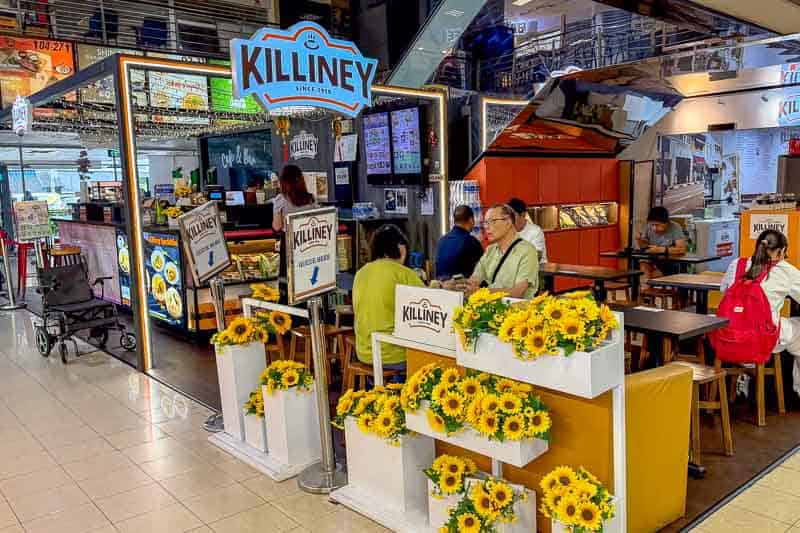

Killiney Kopitiam is another long-established Singapore chain and a good alternative to Ya Kun.
I first tried it because there was an outlet across the road from my hotel and ended up going back later in the trip because it was so convenient.
I wouldn’t necessarily travel across Singapore just to visit Killiney, but I’d happily eat there again if there was one nearby.
Best for: A convenient traditional kaya toast breakfast.
Toast Box – For Convenience


Toast Box is another chain you’ll see all over Singapore, particularly in shopping centres.
I tried the standard set near Raffles Place. Mine came with one kaya toast sandwich rather than two, which actually wasn’t a bad thing given how rich kaya and butter can be.
It was good, convenient and I’d happily eat there again.
Best for: A quick and easy kaya toast breakfast.
Coffee King – For a Hawker Centre Breakfast


I tried Coffee King at Hong Lim Market & Food Centre, where my traditional kaya toast set cost just $3.40 at the time of my visit.
There weren’t the huge slabs of butter I’d found at some of the chains, which wasn’t necessarily a bad thing after eating so much kaya toast during this trip!
I wouldn’t make a special trip for it, but it’s a good inexpensive option if you’re already visiting Hong Lim.
Best for: A cheap hawker centre breakfast.
So Which Kaya Toast Would I Choose?
After trying all these different versions, I don’t think there’s one place that’s going to be right for everyone.
Coffee Queen is probably my current favourite (value for money also comes into this – it’s half the price of the chains), but Ya Kun will always have a special place because it’s become part of my Singapore routine.
For a first-timer, I’d start with Ya Kun. For something with more character, I’d choose Tong Ah or Heap Seng Leong. And if you’re visiting Joo Chiat, I’d definitely try the different version at Chin Mee Chin.
But I wouldn’t travel across Singapore just for kaya toast. Pick one that fits into your plans and enjoy it as part of your morning.
So far, I haven’t found one I don’t like!
Did You Know? Charcoal Toasting Still Exists
Some traditional kopitiams still toast their bread the old-fashioned way – over a charcoal grill!
It adds a gentle smokiness to the toast and keeps the outer crunch with a soft inside. It’s slower than modern electric grills, but fans say the taste is worth the wait.
If you want to try it, places like Heap Seng Leong or Keng Wah Sung are still doing it the old-school way.
Still on My Kaya Toast List
Of course, there are still more kaya toast places I haven’t tried.
Heavenly Wang Cafe has been on my list for a while, and I’d also like to try Ah Seng (Hai Nam) Coffee at Amoy Street Food Centre and Keng Wah Sung in Geylang.
I’ll be back in Singapore again in April, so kaya toast will definitely be on the research list. I’ll update this guide as I try more places – although Ya Kun has a pretty firm hold on that first-morning breakfast spot!
Tips for Ordering Kaya Toast in Singapore
Ordering kaya toast is pretty straightforward. The easiest option is to order a kaya toast set, which usually includes toast, two soft-boiled eggs and a kopi or teh.
At some places these are simply listed as Set A, Set B and so on, so check the menu to see what’s included.
At the big chains, ordering and payment are generally easy. If you’re heading to one of the more traditional coffee shops, though, it’s worth carrying some cash. Smaller stalls may be cash-only or accept local payment methods that aren’t particularly useful for visitors.
If you want less sugar in your coffee, ask for siew dai.
And don’t be put off by those very runny eggs – they’re supposed to be like that! Add soy sauce and white pepper if you like, then eat them with a spoon or dip your kaya toast into them.
I sometimes skip the soy sauce because I quite like the eggs without it – it just depends on my mood.
At hawker centres and food courts, remember to return your tray when you’ve finished.
There are a few other useful things to know before going to Singapore, particularly if it’s your first visit.
Bringing Kaya Toast Home With You

If you just can’t get enough kaya, there are plenty of options to bring some home with you.
I picked up some from Ya Kun Kaya Toast on my last day, but you can find lots of different options in the supermarkets too.
Once you’ve used that all up, you might be able to get your fix in your home country – I know I can here in Australia.
It can be found in the international section of most Woolworths stores across the country, and also in most Asian grocers.
If all else fails, you can also get it online from Amazon.
If you are buying it yourself, note that there are some different types of kaya, so don’t be surprised if the colour and flavour varies from one brand to another.
Is Kaya Toast Worth Trying in Singapore?
Absolutely. Kaya toast is simple, inexpensive and very Singaporean – and it’s become one of those foods I look forward to whenever I return.
If it’s your first time, grab a traditional set from whichever Ya Kun is convenient and see what you think. But if you have a little more time, try one of the older coffee shops too. The toast might not be dramatically different, but the experience certainly can be.
And if you’re planning your trip, I’ve also put together some advice on how many days you need in Singapore to help you work out how much you can realistically fit in.
As for me, I’ll keep working my way through Singapore’s kaya toast options. It’s a tough research job, but someone has to do it!
Still planning your Singapore trip? Take a look how you visit Singapore on a budget.
TRAVEL PLANNING ESSENTIALS
Flights – Book direct with the airline, always.
Book accommodation – My go to is Booking.com
Hire a rental car – DiscoverCars.com is where I search many car rental companies in one place
Get travel insurance – I use CoverMore for my insurance.
Pick up an eSIM – My eSIM of choice is Airalo
Book activities, tours & attractions – I use a few different websites for this. Viator, Get Your Guide and Klook are my first options.
Stay safe with a VPN – I use NordVPN to keep me safe online
Manage your money – I use Wise and ING (Australia) for my travel accounts.
