
Singapore is one of those destinations that doesn’t really have a bad time to visit.
Sitting almost right on the equator, the weather stays hot and humid all year round, so deciding when to go is less about the temperature and more about what you want from your trip.
Maybe you want to experience one of the city’s big cultural festivals, avoid school holiday crowds, or plan around a major event like the Formula 1 Grand Prix.
Whatever your priorities, there’s a perfect time for you.
Contents
This article may contain affiliate links. This means that if you make a purchase after clicking on a link, I may receive a small commission. Read the full disclaimer here.
Still planning your Singapore stopover?
Come hang out with us in the Singapore Stopovers Facebook group – it’s full of practical tips, friendly advice, and travellers just like you figuring out what to see, do, and eat next!
Weather in Singapore
Singapore’s weather doesn’t change much throughout the year. Expect daytime temperatures between 26°C and 33°C, and humidity that rarely drops below 70 percent.
You are just as likely to be wet from sweat as you are from the rain.
Short, heavy rain showers are common, but they usually clear quickly, leaving the air fresh and steamy.
From November to March, the northeast monsoon brings more rain, while the southwest monsoon from June to September tends to be drier but can come with a light haze from regional fires.
April, May and October sit in between the two monsoon seasons and can be some of the hottest months of the year.
This is only a guideline, as I have experienced torrential rain in both April and October – so wet weather really is possible year round.
If you visit in April or May, plan your outdoor sightseeing in the morning and save air-conditioned attractions like museums or shopping malls for the afternoon when the humidity really kicks in.
Even during the wetter months, rain rarely lasts all day. If you get caught in a tropical downpour, it’s easy to retreat indoors – and in Singapore, the indoor options are just as good as the outdoor ones.
The city is packed with modern museums, hawker centres, cafes and shopping centres with excellent A/C, so you’ll stay comfortable no matter what the sky is doing.


Festivals and Events
Singapore’s calendar is packed with events and festivals that showcase its rich mix of cultures and traditions. These are some of the most popular times to visit:
- Pongal (mid-January) – A Tamil harvest festival celebrated in Little India with traditional cooking, cultural performances and decorated streets.
- Thaipusam (January/February) – A Hindu festival known for its vibrant processions between Sri Srinivasa Perumal Temple and Sri Thendayuthapani Temple. Expect crowds, colour and devotion in equal measure.
- Chinese New Year (January or February) – The biggest celebration of the year, with lion dances, parades and markets, especially around Chinatown.
- Singapore Art Week (January) – The city transforms into an open-air gallery, with art installations, exhibitions and performances across museums, galleries and public spaces.
- Vesak Day (May) – A sacred Buddhist festival marking the birth, enlightenment and death of Buddha, observed with prayers and candle processions at temples across the island.
- Singapore Food Festival (July) – A month-long celebration of local cuisine with pop-up stalls, hawker specials and tasting events all over the city.
- National Day (9 August) – Singapore’s birthday is marked with parades, fly-pasts and fireworks, capped off by celebrations around Marina Bay.
- Singapore Design Week (September) – A creative showcase of design, innovation and architecture, with exhibitions and talks held across the city.
- Mid-Autumn Festival (September/October) – Lantern displays, mooncakes and evening light-ups bring Chinatown to life.
- Formula 1 Singapore Grand Prix (usually September) – A highlight on the global racing calendar, with night-races and concerts that take over Marina Bay.
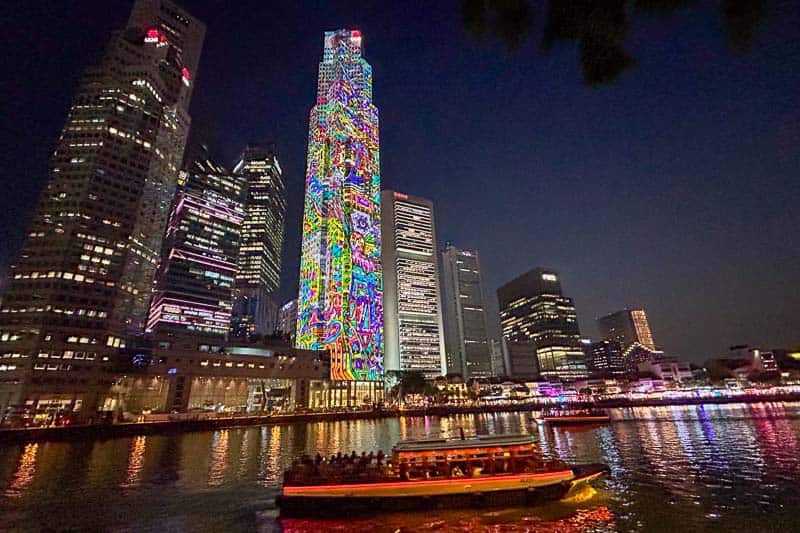
- Singapore River Festival (October/November) – A lively riverside event with light installations, street food and performances along Clarke Quay and Boat Quay.
- Singapore International Film Festival (November/December) – Celebrating Asian and indie cinema with screenings and red-carpet events.
- Christmas on a Great Street (November/December) – Orchard Road glows with festive lights, music and holiday cheer.
During these times things could be a little busier, but that might be just why you want to visit – or why you want to come at a different time.


Crowds, Prices and School Holidays
There’s no real off-season in Singapore, but the number of visitors and hotel prices do vary through the year.
June to August is a busy time thanks to the Northern Hemisphere summer holidays, and December to January is also popular with local and international travellers.
During these months you’ll find higher prices and more crowds at major attractions.
Singapore’s local school holidays also play a big part. Families travel and visit attractions heavily during the March, June, September and December breaks.
The June and December holidays are the longest, each lasting about a month, so theme parks, the zoo and Sentosa tend to be busiest then.
If you’re visiting during those times, it’s worth booking accommodation and popular activities in advance.
If you prefer a quieter visit, try to plan your trip for March to May or September to November, avoiding the peak local and international travel periods.
These months often mean better deals on accommodation and a bit more breathing space at popular spots.

Light Packing Tips
Pack for year-round warmth and humidity. Lightweight, breathable clothes are ideal, and a small umbrella will always come in handy.
A light rain jacket or poncho is useful during the wetter months (November to January), and if you’re travelling in June to September, consider bringing a haze mask if you’re prone to respiratory issues.
Comfortable shoes are essential – you’ll do plenty of walking between air-conditioned comfort and outdoor exploration.
When it rains, it really can pour…
Best Time Based on Your Goal
If you’re planning your trip around a particular experience, here’s a quick guide:
- For festivals and lively local vibes → January to February, September
- For best value and fewer crowds → March to May, October to November
- For maximum outdoor sunshine → February to April
- For food lovers → July (Singapore Food Festival) or any month with hawker events
- For shopping sales → June and December, during the Great Singapore Sale periods
- For families → June or December school holidays, when attractions have special programs
- For art, film and design events → January (Art Week) or September to November (Design Week and Film Festival)
- To avoid the heaviest rain → February to early May
- To avoid haze and humidity → Skip September if you’re sensitive to air quality

So When’s the Best Time to Visit Singapore?
Honestly, any time. The weather doesn’t really change, so your decision should come down to what you want to see and do.
If you want to enjoy local festivals or big events, plan for January to February or July to September.
If you’d rather avoid the crowds and keep your costs down, March to May and September to November are great choices.
Rain or shine, Singapore is always fantastic. It’s one of those cities that’s easy to enjoy year-round, no matter when you visit.
TRAVEL PLANNING ESSENTIALS
Flights – Book direct with the airline, always.
Book accommodation – My go to is Booking.com
Hire a rental car – DiscoverCars.com is where I search many car rental companies in one place
Get travel insurance – I use CoverMore for my insurance.
Pick up an eSIM – My eSIM of choice is Airalo
Book activities, tours & attractions – I use a few different websites for this. Viator, Get Your Guide and Klook are my first options.
Stay safe with a VPN – I use NordVPN to keep me safe online
Manage your money – I use Wise and ING (Australia) for my travel accounts.
