

Tokyo can be an expensive city if you fill your days with observation decks, museums, themed cafés and ticketed attractions.
But one thing I discovered during our trip is that there are also plenty of fantastic things to do in Tokyo for free.
And I’m not talking about filling time with second-rate attractions just because they don’t cost anything.
Some of our favourite Tokyo experiences were free – wandering through temple complexes, exploring neighbourhoods like Shinjuku and Asakusa, looking out over the city from observation decks and watching an incredible projection show after dark.
So if you’re trying to keep your Tokyo budget under control, here are some of the best free things to do, including plenty I’ve experienced myself.
This article may contain affiliate links. This means that if you make a purchase after clicking on a link, I may receive a small commission. Read the full disclaimer here.
Visit Tokyo’s Shrines and Temples
You could spend days visiting shrines and temples in Tokyo and still barely scratch the surface.
Many are free to enter, although some have gardens, museums or other areas that charge an entrance fee.
We visited quite a few during our time in Tokyo, but these four stood out.
Sensō-ji Temple
If you’re visiting Asakusa, you really can’t miss Sensō-ji, Tokyo’s oldest Buddhist temple and one of its best-known sights.
Part of the experience is getting there. Walk through the huge Kaminarimon Gate and along Nakamise-dori, the busy shopping street leading towards the temple.
There are plenty of opportunities to spend money here on snacks and souvenirs, but wandering through the temple grounds won’t cost you anything.


Meiji Shrine
Meiji Shrine is another of Tokyo’s big-name sights, but the setting couldn’t be more different.
The walk through the forest to the shrine is part of the experience, especially when you consider you’re right beside busy Harajuku.
Entry to the main shrine grounds is free, with separate charges for the Inner Garden and Meiji Jingu Museum.
We visited as part of one of our walking tours, which gave us the chance to learn more about what we were seeing rather than simply walking through.
Konno Hachimangu Shrine
For something much quieter, we stumbled across Konno Hachimangu Shrine in Shibuya.
One minute you’re surrounded by busy streets and modern buildings, then you step into a small shrine with trees, stone lanterns and barely another tourist around.
It’s not somewhere I’d cross Tokyo specifically to see, but if you’re exploring Shibuya, it’s a lovely little detour.
Gōtokuji Temple – The Cat Temple
And then there’s Gōtokuji Temple, commonly known as Tokyo’s Cat Temple.
This one is a little further out in Setagaya, but if you like quirky attractions, it’s worth the trip.
Gōtokuji is associated with the maneki-neko, the familiar beckoning cat you’ll see all over Japan.
According to the temple’s story, a cat beckoned a passing feudal lord inside, where he escaped a sudden thunderstorm. The lord later supported the temple.

Today you’ll find rows of white maneki-neko figures around the temple, from tiny cats to much larger ones.
Entry to the grounds is free. If you’d like your own maneki-neko or an amulet, you can buy one from the temple office – although then, of course, it no longer counts as a completely free outing!
Join a Free Walking Tour
Okay, this one isn’t technically free.
Free walking tours are usually tips-based, so while there’s no set ticket price, you should budget for a tip for your guide.
We did three free walking tours in Tokyo, covering very different parts of the city:
- Asakusa
- Shibuya, Harajuku and Meiji Shrine
- Shinjuku at night


Two of the three were particularly good, and each showed us a different side of Tokyo.
I like doing a walking tour early in a trip. Guides often explain local customs, point out things you would otherwise walk straight past and give you ideas for places to return to later.
I’ve written a separate guide about our Tokyo free walking tours, including what we liked – and didn’t like – about each one.
You can also browse free walking tours in Tokyo on GuruWalk and reserve a place before you arrive.
Tip: Don’t let the word “free” fool you when working out your budget. If you’ve enjoyed the tour, factor in a reasonable tip for your guide.
Visit the Tokyo Stock Exchange for Free
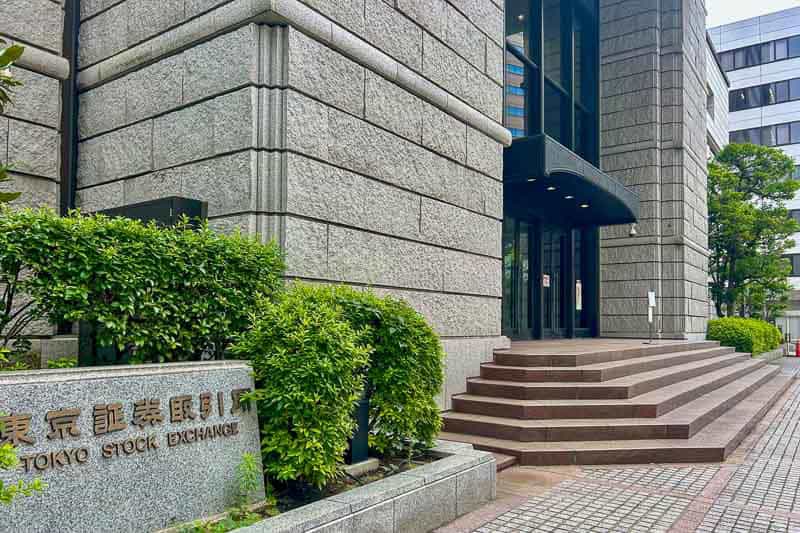
This was a suggestion from one of my followers and definitely not something I would have thought to put on our Tokyo itinerary myself.
Unfortunately, I didn’t check the opening days carefully enough. We made our way to the Tokyo Stock Exchange, only to discover it was closed!
So learn from my mistake and check before you go.
Visitors can explore TSE Arrows, the Tokyo Stock Exchange’s market information centre, on a free self-guided visit. There’s also an English audio guide you can use on your phone.
Self-guided visits are available on weekdays and you don’t need to book ahead if there are fewer than 10 people in your group.
Allow around 30 minutes for a look around.
The exchange can occasionally close to visitors for events as well as on weekends, public holidays and around New Year, so check the Tokyo Stock Exchange visitor information before making a special trip.
Find Some of the Best Free Views in Tokyo
You don’t have to pay for an observation deck to get a great view over Tokyo. We found some excellent free viewpoints around the city.
Asakusa Culture Tourist Information Centre
Directly opposite the Kaminarimon Gate, the Asakusa Culture Tourist Information Centre has a free observation terrace on the 8th floor.
From here you can look straight down Nakamise-dori towards Sensō-ji and across towards Tokyo Skytree.
We visited while exploring Asakusa and I think it’s well worth popping in, especially since you’re likely to walk straight past the building anyway.


Tokyo Metropolitan Government Building
For a much higher view, head to the Tokyo Metropolitan Government Building in Shinjuku.
The observation decks are on the 45th floor, around 202 metres above the ground, and admission is free.
You get huge views across Tokyo and, on a clear day, you may even see Mt Fuji in the distance.
Unfortunately, the weather wasn’t playing nicely when we visited, so there was no Mt Fuji for us!
Even so, the seemingly endless Tokyo skyline was impressive.
Opening times can vary between the North and South observatories, so check the current schedule before you go.
Tip: Visit later in the afternoon and you can head back outside after dark for the TOKYO Night & Light projection show.


Watch Shibuya Scramble from Above
You can experience the famous Shibuya Scramble Crossing at street level, but it’s just as much fun watching the chaos from above.
We went to the Starbucks overlooking the crossing. The SHIBUYA TSUTAYA building has since been renovated, but there’s still a Starbucks with a second-floor seating area overlooking the scramble.
Of course, there’s a slight catch with including this in a list of free things to do – you’ll probably want to buy a coffee!
You don’t need to spend anything to experience the crossing itself, though. Cross it a few times, then stand back and watch hundreds of people pour into the intersection from every direction.
See the TOKYO Night & Light Show


Once you’ve been up the Tokyo Metropolitan Government Building for the views, don’t rush away.
After dark, the building itself becomes the attraction.
TOKYO Night & Light is a huge projection mapping show displayed across the eastern façade of the Tokyo Metropolitan Government Building. It’s free to watch and was one of those unexpected Tokyo experiences that we really enjoyed.
The projections use the enormous building as a screen, with colourful animations, music and changing displays. When we visited, we even saw Pac-Man taking over the building.
Shows run after dark, with several projections each evening. Programs and starting times can change, so check the current TOKYO Night & Light schedule for your visit.
If you’re already planning to visit the observation decks, time it so you can do both – city views first, then the projections after dark.
Explore Tokyo’s Neighbourhoods for Free
One of my favourite free things to do in Tokyo was simply wander.
Tokyo’s neighbourhoods can feel completely different from each other, and you don’t need an attraction or ticket to enjoy them. Pick an area, get off the train and start exploring.
These were some of our favourites.
Shinjuku
Come to Shinjuku for skyscrapers, neon lights and some of that sensory overload you probably imagined before arriving in Tokyo.
Wander through Omoide Yokocho, take a look at the tiny bars of Golden Gai and keep an eye out for the giant Godzilla head peeking over the buildings in Kabukicho.
I’d recommend seeing Shinjuku during the day and after dark – it feels like two different places.
Shibuya
Of course you’ll want to see Shibuya Scramble Crossing, but don’t immediately move on once you’ve crossed it.
Shibuya is fun to explore on foot, with huge video screens, shops, restaurants and people everywhere. You’ll also find the Hachikō statue just outside Shibuya Station.
Asakusa
Asakusa gives you a very different side of Tokyo.
Sensō-ji is the obvious attraction, but spend some time wandering the surrounding streets too. You’ll find traditional shopfronts, small temples and shrines, rickshaws and plenty of glimpses of Tokyo Skytree.


Ginza
It’s also easy to combine several of the free activities in this list here.
You certainly can spend a lot of money in Ginza, but you don’t have to.
Tokyo’s luxury shopping district is filled with department stores, flagship stores and impressive modern architecture.
We weren’t there to buy designer handbags. We simply wandered, browsed and enjoyed seeing another side of Tokyo.
Harajuku
For something completely different, head to Harajuku.
Walk along busy Takeshita Street for colourful fashion, sweet shops and crowds, then explore the surrounding streets.
It’s easy to combine Harajuku with Meiji Shrine and Yoyogi Park, giving you several free things to do in one area.
Akihabara
Even if you’re not particularly interested in anime or gaming, Akihabara is worth experiencing at least once.
It’s packed with electronics stores, manga and anime shops, gaming arcades and enormous colourful signs.
You don’t have to buy anything. Browsing the shops and wandering the streets is half the fun.
More Free Things to Do in Tokyo
There were a few more free attractions I didn’t get to, plus a couple that have opened since my visit.
I haven’t personally experienced these, but they’re worth considering if you have more time.
Watch the Tuna Auction at Toyosu Market
Toyosu Market took over the wholesale market operations that were once at Tsukiji.
Visitors can walk through designated areas and watch some of the market activity through observation windows.
You can also see the famous tuna auction from an upper-floor observation area without a reservation. You’ll need to arrive early, though – the auction takes place early in the morning.
There’s also a closer observation deck. It’s free, but places are limited and you’ll need to apply in advance, with entry decided by lottery.
Toyosu also has a rooftop garden with views towards Tokyo Bay.
Remember that this is a working wholesale market, so check current opening days and visitor information before making the early-morning trip.
Visit the Imperial Palace East Gardens
The Imperial Palace East Gardens occupy part of the former Edo Castle grounds and are free to visit.
You’ll find huge stone walls, moats, historic guardhouses, gardens, lawns and seasonal flowers, along with remains of the old castle keep.
It’s right in central Tokyo, making it an easy way to add some greenery and history to a day of sightseeing.
Opening hours and closing days vary, so check the Imperial Household Agency’s current opening information before you visit.
Free guided tours of parts of the Imperial Palace grounds are also available, with separate entry and booking arrangements.
Spend Some Time in Yoyogi Park
We walked through Yoyogi Park as part of one of our walking tours, but I’d like to go back with more time to simply wander.
It’s one of Tokyo’s largest city parks and is free to enter.
Weekends tend to be livelier, with locals picnicking, exercising, practising music and meeting friends. You may come across performers or organised groups too, but part of the appeal is simply seeing what’s happening that day.
It’s easy to combine with Harajuku and Meiji Shrine, as they’re all in the same area.
See Tokyo Aqua Symphony in Odaiba
Here’s one for my own list next time I’m in Tokyo.
Tokyo Aqua Symphony is a huge fountain attraction at Odaiba Seaside Park, which opened in March 2026.
The fountain stretches around 250 metres across the water, with jets reaching approximately 150 metres high. Evening shows combine the fountains with music, lights and projections against the Tokyo Bay skyline.
And it’s free to watch.
Odaiba itself is worth exploring too. Walk along the waterfront, enjoy views across Tokyo Bay and Rainbow Bridge, and see the enormous Unicorn Gundam outside DiverCity Tokyo Plaza.
Show times can change, so check the current schedule before making a special trip.
I haven’t seen Tokyo Aqua Symphony myself because it opened after my visit, but it’s definitely going onto my list for next time.
Visit a Free Museum
If the weather isn’t cooperating, Tokyo also has museums you can visit without paying an admission fee.
One of the most interesting is Intermediatheque, run jointly by the University of Tokyo and Japan Post.
It’s inside KITTE Marunouchi, beside Tokyo Station, making it easy to add to a day exploring central Tokyo.
The museum displays items from the University of Tokyo’s collections, including natural history specimens, scientific instruments and archaeological objects.
I didn’t visit myself, but I’d keep this one in mind for a rainy day.
Other free museums include the Meiji University Museum, Sumo Museum, Ryogoku Fireworks Museum and Omori Nori Museum.
Opening days vary, so check current details before making a special trip.
How to Plan a Cheap Day in Tokyo
One thing I quickly learnt in Tokyo is just how enormous the city is.
You can fill your itinerary with free attractions, but if you’re constantly jumping on trains from one side of Tokyo to the other, those transport costs soon add up.
Instead, group a few things together.
Spend a morning exploring Harajuku, Meiji Shrine and Yoyogi Park, or combine Sensō-ji, Nakamise-dori and the Asakusa Culture Tourist Information Centre.
In Shinjuku, wander the neighbourhood, visit the Tokyo Metropolitan Government Building, then stay for TOKYO Night & Light after dark.
And don’t feel as though every hour needs an attraction. Some of my favourite time in Tokyo was simply walking, looking down side streets, popping into shops and seeing what we stumbled across.
Save your money for the Tokyo experiences you really want to do, then fill the gaps with some of these free ones.
Are There Really Good Free Things to Do in Tokyo?
Absolutely.
You can visit Sensō-ji and Meiji Shrine, look across the city from a free observation deck, experience Shibuya Crossing, explore neighbourhoods like Shinjuku and Asakusa, and finish the day watching a huge projection show without paying an entrance fee.
That’s not to say you should try to do Tokyo entirely for free. There are plenty of paid attractions worth including if they’re important to you.
For me, the trick is to choose the experiences I really want to spend money on, then mix them with free things along the way.
Tokyo is also a fantastic city for simply wandering. Give yourself time to explore without a plan occasionally – you never know what you’ll find around the next corner.
And every yen you save on sightseeing leaves a little more in the budget for the things that matter to you – whether that’s great food, another experience or perhaps a few more Japanese souvenirs than you intended to buy!
TRAVEL PLANNING ESSENTIALS
Flights – Book direct with the airline, always.
Book accommodation – My go to is Booking.com
Hire a rental car – DiscoverCars.com is where I search many car rental companies in one place
Get travel insurance – I use CoverMore for my insurance.
Pick up an eSIM – My eSIM of choice is Airalo
Book activities, tours & attractions – I use a few different websites for this. Viator, Get Your Guide and Klook are my first options.
Stay safe with a VPN – I use NordVPN to keep me safe online
Manage your money – I use Wise and ING (Australia) for my travel accounts.
